- Home
- Gifts of the Holy Spirit
- Use Gifts of the Spirit
How to Use Gifts of the Spirit: A Guide to Exercising and Operating in the Holy Spirit
By Don Bell / Kingdom Anointing
Learning how to use gifts of the Spirit is essential for every believer who wants to deepen his or her walk with God and dramatically increase their ability to serve others. The Holy Spirit has equipped every believer with nine powerful gifts designed to build up the Body of Christ (the worldwide community of believers) and advance God's Kingdom; they are part of your inheritance as a child of God.
If you have already taken the steps to activate your spiritual gifts by stepping out in faith, you might be wondering, "What do I do next?" In this guide, we will move from initial activation to practical application, exploring the everyday mechanics of exercising your spiritual gifts.
You will learn practical steps for exercising the gifts during prayer meetings and daily interactions with others, learning to recognize and respond to the Holy Spirit's promptings. The real-world examples and supporting Scriptures will help to guide you and build confidence on your journey into Kingdom work.
How to Use Gifts of the Spirit and Activate Your Calling to Serve Others
 "I show you a more excellent way" (1 Corinthians 12:31).
Source: ©Photoerick/Depositphotos.com
Paul writes, "The manifestation of the Spirit is given to each one for the profit of all" (1 Corinthians 12:7). The Greek word συμφέρω (sympherō) is translated as "profit of all," meaning to bring together or to contribute in order to help.
Before discussing the nine gifts of the Spirit, Paul made clear that these gifts are given to each individual in the Body of Christ, not just a select few, and that the purpose of spiritual gifts is to unite believers and help them encourage and build each other up for service.
Moving From Spectator to Active Participant
God's plan invites all believers to participate actively in ministry, moving beyond the passive role of spectator to become engaged participants in the work of advancing the kingdom.
Local leaders are given by the Lord to equip believers for the work of ministry (Ephesians 4:11–13), and the gifts of the Spirit are essential tools for that work. Leaders must equip believers to serve effectively to strengthen the body of Christ to which they belong.
This includes developing believers' confidence in knowing how to use gifts of the Spirit. Understanding how to exercise these gifts enables believers to move from passive observation to active participation. Only when believers are fully equipped and actively operating in the gifts will they fully come alive; then, the body of Christ will grow and mature as God intends.
The Kingdom of God isn't just a message to be heard; it's a reality to be lived and shared with others.
When all is said and done, Kingdom life isn't just for Sunday mornings; it's a full-time commitment — it extends into every area of our daily lives. It's like having a constant, day-to-day partnership with the Holy Spirit.
Scripture says, "Jesus went about all Galilee, teaching in their synagogues, preaching the gospel of the kingdom, and healing all kinds of sickness and all kinds of disease among the people" (Matthew 4:23).
Jesus gave us His example to follow:
- He taught
- He proclaimed
- He demonstrated
The apostle Paul says, "All things are of God, who has reconciled us to Himself through Jesus Christ, and has given us the ministry of reconciliation" (2 Corinthians 5:18) — the work of helping people be restored to relationship with God. This call to the ministry of reconciliation isn't just for pastors; it's your calling too!
Why the Fruit of the Spirit Must Accompany the Gifts
The Bible clearly outlines the ninefold fruit of the Spirit in Galatians 5:22–23: love, joy, peace, patience, kindness, goodness, faithfulness, gentleness, and self-control. These characteristics are not separate entities but integrated aspects of the Holy Spirit's nature.
When we receive the Holy Spirit, we receive all nine aspects of the fruit because they are inseparable parts of His character. Just as you cannot divide the Holy Spirit into pieces, so you cannot separate these aspects from one another. They exist within every born-again believer, gradually becoming more visible as we learn to walk in step with the Spirit — following His lead in our daily lives.
The Symbiotic Relationship Between Fruit and Gifts
The ninefold fruit of the Spirit works in beautiful harmony with the gifts of the Spirit. As this fruit matures in our lives, it creates the perfect environment for the gifts to operate effectively. Of all the fruit that accompanies the gifts, love holds a uniquely central position — so much so that Paul devoted an entire chapter (1 Corinthians 13) to explaining its vital role in spiritual ministry.
Walking in God's unconditional (agape) love ensures that we use the Holy Spirit's gifts to serve others instead of promoting ourselves. God's peace helps us exercise gifts with confidence and wisdom. Self-control prevents the misuse of spiritual gifts, while faithfulness keeps us consistent in their application. The fruit builds the character foundation that enables us to handle the gifts responsibly and impact others positively.
As we grow in Christ, this ninefold fruit gradually develops and transforms us to reflect Jesus' character more clearly. It would be illogical to suggest that a believer could manifest only one or two aspects of the fruit while lacking the others, as they all stem from the Holy Spirit.
When learning how to use gifts of the Spirit effectively, you'll discover that all nine gifts are available to exercise, just as all nine aspects of the fruit develop within us. The fruit works together to shape our character for ministry, while the nine gifts operate together to equip us for service in God's Kingdom.
Of all the fruit that accompanies the gifts, love holds a uniquely central position — so much so that Paul devoted what came to be an entire chapter to explaining its vital role in spiritual ministry.
The Vital Role of Love in Spiritual Ministry
Christians refer to 1 Corinthians 13 as "The Love Chapter," yet they rarely consider its scriptural context and intended meaning when learning how to use gifts of the Spirit.
Paul wrote his first letter to the Corinthian church to address crippling doctrinal and practical issues about which they had written to him in a previous letter, asking for his help. One of the main issues he tackles is the proper use of spiritual gifts in the church.
Learning from the Mistakes of the Corinthian Church
The Corinthian believers lacked a clear understanding of how to use gifts of the Spirit in the local church setting. Some were selfishly exercising the gifts for their own ends without understanding their shared role in the church; others were selfishly inactive — always receiving ministry from others while rarely, if ever, contributing ministry themselves.
Paul begins his teaching on spiritual gifts by saying, "Now concerning spiritual gifts, brethren, I do not want you to be ignorant" (1 Corinthians 12:1). He goes on to explain the manifestations of the nine gifts and makes it clear that each member of the Body of Christ has great value and a role in exercising the gifts of the Spirit — not just a few who might consider themselves better educated or more important. He urges, "Earnestly desire the best gifts. And yet I show you a more excellent way" (1 Corinthians 12:31).
What Paul Meant by "The Best Gifts"
The Greek word μέγας (megas), translated as "best," has been misunderstood to imply that some gifts are more desirable than others. However, megas is more accurately translated as "great," as it is elsewhere in the New Testament. Paul is actually saying, "Earnestly desire these great gifts!"
Moreover, the best gifts are those that best meet the need of any given moment. For instance, when there's a need for decisions to be made, apply the gift of a word of wisdom, when there's a need for healing, apply a gift of healing.
But even when we understand which gifts to use in any given moment, Paul reminds us that there's something even more fundamental to effective ministry.
Agape Love: The More Excellent Way to Minister
The "more excellent way" Paul speaks of is the love he goes on to describe, purposely using the Greek word ἀγάπη (agapē) — God's love. Agape is distinct from emotional affection or from the brotherly love (philadelphia) mentioned in Romans 12:10 and elsewhere. It is not the love that's commonly discussed, depicted, or sung about in society or, dare I say it, in some of today's churches.
Agape is pure love; it transcends denominational and cultural boundaries, bringing believers together in unity and enabling us to minister effectively to one another.
Demonstrating Love Through Action
Agape and spiritual gifts flow together in perfect harmony — love provides the motivation while gifts provide the means to minister effectively. So it's no coincidence that after 1 Corinthians 13, Paul offers teaching on how to properly use gifts of the Spirit in the local church.
Clearly, love motivates believers to use the gifts — to step beyond their comfort zones to prophesy and interpret messages in tongues to bless their fellow believers. Paul affirms this, saying, "Even so you, since you are zealous for spiritual gifts, let it be for the edification of the church that you seek to excel" (1 Corinthians 14:12).
How can you tell whether God's agape is present and flowing in a gathering of believers? They will desire the gifts of the Spirit and actively use them to edify the Body of Christ. The late healing evangelist Kathryn Kuhlman was famous for saying, "Love is something you do!"

Kathryn Kuhlman says, "If you want a single word to characterize the person of God, all you will have to do is to take four letters and write them over and over again from the beginning to the end — the word, love — and that's God!"1
When love motivates our use of spiritual gifts, certain characteristics will always be present. Paul identifies three specific qualities that mark genuine spiritual ministry
Three Biblical Tests for Genuine Spiritual Manifestations
Paul teaches in 1 Corinthians 14:3 that those who prophesy should speak words of edification, exhortation, and comfort to others. These three qualities are basic to prophecy and, by extension, to each of the nine gifts of the Holy Spirit.
- Edification means to build others up.
- Exhortation means to offer strong encouragement.
- Comfort means to bring others into a more peaceful state.
Therefore, when learning how to use gifts of the Spirit, ensure that any operation of the gifts meets at least one of these three characteristics to be considered genuine. The gift's manifestation should leave individuals or groups in a better physical, mental, or spiritual condition than before.
Applying the Three Tests in Gatherings
Edification
The Greek word οἰκοδομή (oikodomē) is translated as "edification," meaning to build up and promote growth in oneself and others.
Paul emphasizes that believers should desire spiritual gifts and focus on edifying the Body of Christ. He writes: "How is it then, brethren? Whenever you come together, each of you has a psalm, has a teaching, has a tongue, has a revelation, has an interpretation. Let all things be done for edification" (1 Corinthians 14:26).
This highlights the importance of edification when believers gather, suggesting that each person should be willing to contribute something to benefit the group — such as a teaching, a word of revelation, or a tongue with its interpretation (1 Cor. 14:26).
Our role is to build up our fellow believers by sharing spiritual gifts as prompted by the Holy Spirit. In turn, we are edified by the participation of others. Furthermore, when led by the Spirit, we can be instruments to meet people's needs at any time and in any place. Our ministry is empowered by His anointing when we are motivated by a genuine desire to love and serve others.
Learning How to Exercise the Gifts from Jesus' Example
Let's consider the miracle that Jesus performed while staying at Simon Peter's house in Capernaum. Jesus was teaching, and the crowd not only filled the modest house, but people gathered outside in the street eager to hear His message.
Analyzing the Miracle at Peter's House
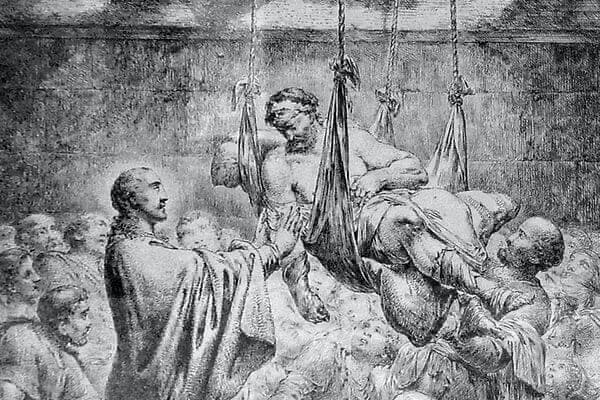 Jesus Healing the Paralytic Man at Capernaum
PD Source: Engraving by Bernhard Rode, 1780
Four men had carried their paralytic friend to Peter's house, believing that Jesus would heal him. Seeing the crowd of people, they carried him up the outside stairway and onto the roof, where they removed a section of its covering and lowered the young man on his mat down to where Jesus was seated.
Carefully read the following Scripture to identify the gifts of the Spirit that Jesus used.
When Jesus saw their faith, He said to the paralytic, "Son, your sins are forgiven you."
And some of the scribes were sitting there and reasoning in their hearts, "Why does this Man speak blasphemies like this? Who can forgive sins but God alone?"
But immediately, when Jesus perceived in His spirit that they reasoned thus within themselves, He said to them, "Why do you reason about these things in your hearts?
Which is easier, to say to the paralytic, 'Your sins are forgiven you,' or to say, 'Arise, take up your bed and walk'? But that you may know that the Son of Man has power on earth to forgive sins" — He said to the paralytic, "I say to you, arise, take up your bed, and go to your house."
Immediately he arose, took up the bed, and went out in the presence of them all, so that all were amazed and glorified God, saying, "We never saw anything like this!" (Mark 2:5–12)
Learning From the Master: Identifying the Gifts Jesus Used
Notice how Jesus operated multiple gifts of the Spirit in this single encounter:
- Word of Knowledge: Because the Holy Spirit ministers to the heart of the matter, Jesus received a word of knowledge revealing the paralytic man's underlying spiritual condition. He then forgave the man's sin, bringing restoration and relief, so the paralytic could now believe himself worthy to exercise faith and accept healing for his body.
- Discerning of Spirits: Jesus then "perceived in His spirit" that some of the scribes were accusing Him of blasphemy. The Greek word ἐπιγινώσκω (epiginōskō) is translated as "perceive," meaning to gain knowledge, to be fully acquainted in a discerning manner.
- Word of Wisdom: Blasphemy could lead to a serious charge that was punishable by death, so the Holy Spirit gave Jesus wisdom on how best to respond to the serious situation developing. He presented the scribes with a trick question for which they'd be unable to give a clear answer.
- Working of Miracles: Jesus then performed a miracle, and the man's physical mobility was restored. It was likely not a "gift of healing," since the cure was instant. The miracle sealed Jesus' right to pardon the man, and it silenced the scribes.
The crowd merely saw the man pick up his sleeping mat and walk home healed, and they would say that an amazing miracle had taken place. They wouldn't have realized that Jesus was using spiritual gifts given by the Holy Spirit to do the miraculous work.
We read in Scripture, "How God anointed Jesus of Nazareth with the Holy Spirit and with power, who went about doing good and healing all who were oppressed by the devil, for God was with Him" (Acts 10:38).
Remember, Jesus did not perform miracles through His deity alone; He performed miracles as a man filled with the Holy Spirit — showing us that we, too, can operate in God's power. Not only did He call on us to do His works (John 14:12), but He demonstrated how to use gifts of the Spirit to do them.
Understanding the historical context of this miracle helps us appreciate even more fully how Jesus operated in the gifts.
A Personal Anecdote
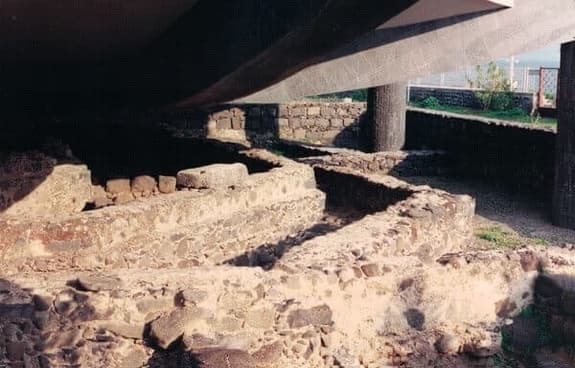 The Ruins of Simon Peter's House In Capernaum
Source: ©Don Bell
When visiting the ruins of Simon Peter's house in Capernaum, I was struck by its compact size: only a few tiny rooms surrounded by two small courtyards. A crowd would have had to spill out onto the street, listening to Jesus through the window.
Houses of that era in Israel often had flat roofs of straw or tiles, reached by outside stairs. The roof was used for extra living space and for sleeping on hot summer nights when cool breezes off the nearby Sea of Galilee would have been most refreshing. 2
What You've Learned: Where to Go From Here
You've seen that learning how to use gifts of the Spirit begins not with technique, but with character. Love must be your motivation when exercising the gifts, the fruit of the Spirit must mark your ministry, and the three biblical tests of edification, exhortation, and comfort must guide each manifestation.
You've also seen how Jesus modeled this beautifully in a single encounter at Peter's house — operating multiple gifts of the Spirit seamlessly, moved by compassion, and leaving everyone in the room better than He found them. That's the standard He has set for us. And because the same Spirit who anointed Jesus now lives in you, it is a standard well within your reach.
But understanding how to exercise the gifts rightly is just the beginning. Once you become comfortable using the gifts of the Spirit, the Holy Spirit will often call you to reach out and minister to others. Take the next step in your spiritual growth by exploring how to flow in the gifts of the Holy Spirit as you yield to His timing in corporate and one-on-one ministry settings.
We'll explore how to recognize and respond to the Holy Spirit's promptings, how to overcome the hesitancy of stepping out in faith, and how to grow from your very first steps into the kind of mature, flowing ministry that builds the Body of Christ and glorifies God in His Kingdom.
Next: How to Flow in the Gifts of the Holy Spirit for Ministry
Endnotes
1 Kuhlman, Kathryn. I Believe in Miracles. Rev. ed. South Plainfield, NJ: Bridge Publishing, 1992.
2 Biblical Archaeology Society Staff. "The House of Peter: The Home of Jesus in Capernaum?" Biblical Archaeology. October 12, 2023. biblicalarchaeology.org.
In This Series
- The Gifts of the Holy Spirit Guide
- The Purpose of the Nine Gifts of the Spirit
- Does Every Believer Receive All Nine Gifts
- Frequently Asked Questions About Spiritual Gifts
- How Jesus Exercised the Gifts of the Spirit
- How to Activate the Gifts of the Holy Spirit
- How to Use Gifts of the Spirit: A Practical Guide
- How to Flow in the Gifts of the Holy Spirit
Suggested Articles
How to Flow in the Gifts of the Holy Spirit Daily
Learn how to flow in the gifts of the Holy Spirit. Discover how to recognize His promptings, overcome fear, and step out in faith to minister with confidence.
How Jesus Exercised the Gifts of the Spirit: Your Example
Understand the biblical truth of how Jesus exercised the gifts of the Spirit. See how He relied on the Holy Spirit to perform miracles and how you can too.
How to Activate the Gifts of the Holy Spirit: A Guide to Discovery
Discover how to activate the gifts of the Holy Spirit. Overcome fear, partner with God, and release the nine supernatural gifts in your daily life today.







About the Author

Don Bell is the creator of KingdomAnointing.com and a dedicated follower of Jesus Christ. Drawing from decades of serving the Body of Christ through small groups, ecumenical retreats, and personal prayer ministry, he now pours his experience into this digital ministry—encouraging believers to seek God's Kingdom and walk daily in the fullness of the Holy Spirit.

Encouraged by This Page? Please Share It
If the inspirational content on this page encouraged you, please consider sharing it. I choose to spend my time writing instead of posting on social media, so I rely on readers like you to help spread the word. Use the social sharing buttons below!
 SCAN to access KingdomAnointing.com on your CELLPHONE
Hi, I'm Don
Welcome! I am an everyday believer whose life was transformed by a personal encounter with the Holy Spirit. After years of small group involvement and ecumenical retreats, I now focus entirely on this online ministry. Kingdom Anointing™ exists to help you build unshakeable faith, walk boldly in the gifts of the Holy Spirit, and live out the reality of the Kingdom of God. Please join me on this exciting journey!
Freely Given
All content on this site is freely given. God provides!
Jesus says, "As you go, preach, saying, 'The kingdom of heaven is at hand.' ... Freely you have received, freely give" (Matthew 10:7–8).
Paul says, "For we are not, as so many, peddling the word of God; but as of sincerity, but as from God, we speak in the sight of God in Christ" (2 Corinthians 2:17).
The Lord Bless You
"The Lord bless you and keep you; the Lord make His face shine upon you, and be gracious to you; the Lord lift up His countenance upon you, and give you peace" (Numbers 6:24–26).

Privacy Policy | Site Policies | Contact Me
Copyright © 2019–2026 by Donald Robert Bell.
All rights reserved worldwide.
Kingdom Anointing™ is a trademark of Donald Robert Bell

Unless otherwise noted, Scriptures are taken from the New King James Version (NKJV). Copyright © 1982 by Thomas Nelson, Inc. Used by permission. All rights reserved.
This site uses cookies for its operation and to enhance your experience — Privacy Policy. KingdomAnointing.com does not sell any personal information.